
High-Throughput Transcoding: Moving from Serial Processing to Parallel Worker Clusters
When organizations undertake digital transformation initiatives, legacy archive migrations, or quarterly financial audits, document conversion requirements scale from dozens of files into tens of thousands. Processing files sequentially is bottlenecked by CPU single-thread limits, memory fragmentation, and network latency.
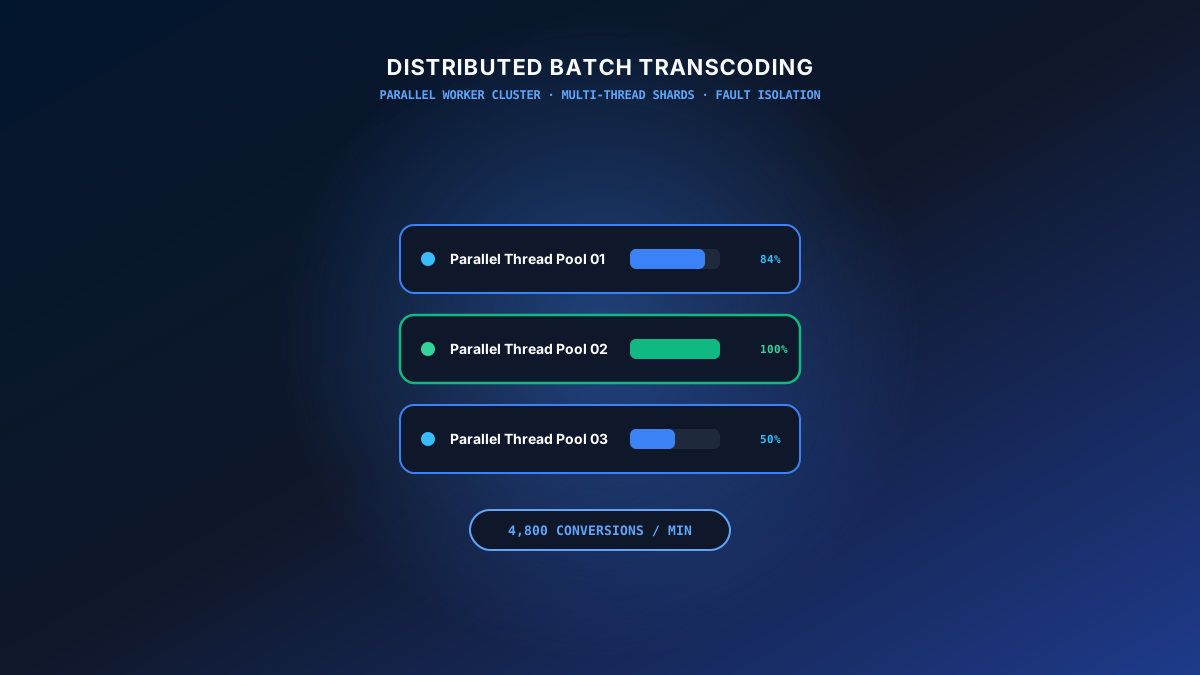
SwiftFileConvert's distributed batch engine leverages a Dynamic Worker Pool Topology, automatically sharding large batches across multi-core server nodes to achieve throughput rates exceeding 4,800 conversions per minute.
Parallel Sharding & Fault Isolation
Batches are chunked into 50-file shards with SHA-256 checksums to verify payload integrity.
Dynamic thread pools transcode multiple formats simultaneously (PDF, DOCX, WebP, CSV).
Corrupt files are quarantined into an audit log without halting the overall batch queue.
1. Preserving Nested Folder Hierarchies & Dynamic Naming Tokens
A major failure mode in standard batch tools is the flattening of complex directory structures into an unorganized single-folder dump. SwiftFileConvert guarantees 100% preservation of recursive folder trees and supports dynamic naming tokens:
{source_folder}/{year}/{month}/{original_name}_v{version}.pdf{department}/processed/{date}_inv_{id}.pdfa
2. Concurrency Benchmarks & Infrastructure Optimization
By delegating CPU-intensive rasterization and PDF rendering across distributed worker threads, organizations achieve linear scaling performance with near-zero latency degradation during peak traffic cycles.
Conclusion
Enterprise batch processing eliminates repetitive manual labor, ensures formatting consistency, and accelerates high-volume document workflows with bulletproof fault tolerance.